





Mahatma Mangat Ram: An Advocate of Harmony among Religions
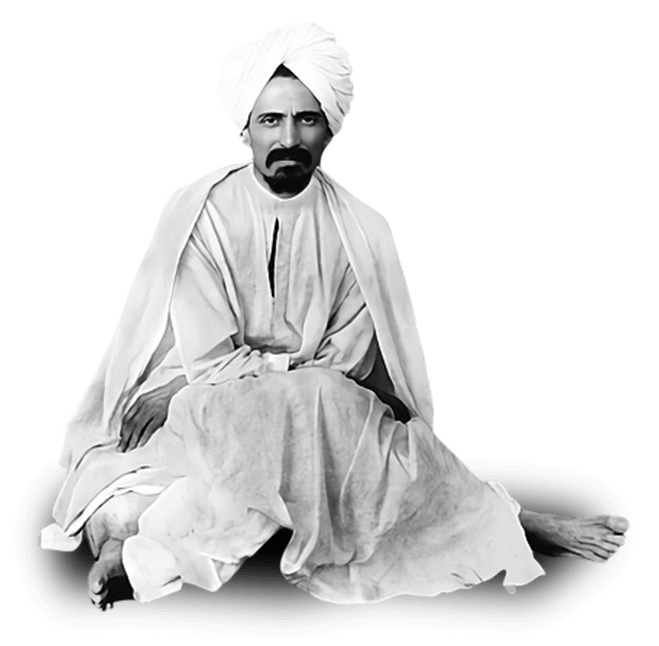
Abstract: Mahatma Mangat Ram (1903-1954) was a true saint of the modern age. He lived a life of immaculate purity. Prayers and meditation were his reigning passion of him right from the tender age of three years. All the traits of saint-hood and goodliness to which scriptures point out could be witnessed in the life of this great saint, He wrote two books: Samta Parkash and Samta Vilas. Through his teachings and writings, he tried to propagate harmony in all religions and faith. He has pointed out that it is the glory of God that has manifested itself through all prophets and true saints of all religions. He says that all prophets laid down the principles with due regards to their time and place. He underlines that there is no difference in the substance of their teachings.
All great saints throughout the world have preached to us that all religions are the same. We are told that the religions are but the different pathways to the same destination called God. Kabir, Dadu, Nanak and many more preached harmony in the society, vindicated the glory of God and the supreme power of Truth. These saints inspired faith in the higher values of life. They teach us that spirituality is the outcome of living a life centred in Dharma. And Dharma according to them is not a set of dogmas and beliefs but the working of a universal cosmic order which keeps life together, leading man to ultimate freedom from all limitations. All saints believe that freedom is that which every religion tries to aim at.
However, ills like zealotry, fanaticism among others divide people based on religions, castes and creeds, demolishing the harmony in the society. But every cloud has a silver lining. History is testimony to the fact that several spiritual colossuses take birth frequently to iron out the flaws of schism and chasm and unite the people, asserting that the soul in everyone is the same and it is beyond the framework of any superiority and inferiority.
Mahatma Mangat Ram (1903-1954) is one of those great saints of India who devoted their lives to teaching us the true definition of Dharma. Born in a humble family in a remote village of District Rawalpindi (now in Pakistan) on 24th Nov.1903, Mangat Ram was an exceptionally quiet and sober child. Even when he was less than five years old, he started spending time in prayer and meditation. Compassion, sacrifice, simplicity and frankness were evident from his everyday life. At school, boy Mangat was an outstanding student. He picked up and remembered all that was taught. When he talked on any of the ethical or spiritual issues, even teachers felt astonished. Many teachers and fellow students started calling him Lord Bishop. With the passage of time boy, Mangat’s devotion to prayer and meditation went on increasing. Playfulness, merriment, comfort, and sleep were all forgone for the love and glory of the Almighty God.
He lived a life of immaculate purity. Prayer and meditation were the reigning passion of him right from the tender age of three or four. The quest of the Eternal Truth or the Supreme Being went on increasing with years. No comfort and no pleasure of the world lured this young seeker from the path of intense love of God. His remembrance, His worship, His devotion, His Meditation, His glory, His grace, His service alone counted with Mangat Ram and nothing else
At the age of thirteen, he attained self-realization which he calls Samta Anand. He did not wish that his inner state of spiritual enlightenment be known widely. He wanted to avoid publicity. He gave no place to worldly attachments. Almost from 1923, whatever grain, jaggery, money etc. came in from time to time, was all used on the welfare of the poor and needy. It became a tradition. Every year in the middle of October, a Yagya was organized in his native village. People from all communities were invited to participate in it. At a time when caste Hindus would not sit side by side of the untouchables and Muslims for taking food, this was an ideal platform to establish harmony not only among the different religions but also in castes and different strata of society.
Eternity has two important characteristics: spontaneity and naturalness. When we look at the sun or the moon or the stars in the sky day after day do we ever feel even remotely that after all, it is the same sun or moon that we have seen yesterday or day after yesterday. It is so spontaneously fresh. It is so naturally new. Shri Mangat Ram’s spontaneity and naturalness of spirituality are what strikes most when one tries to contemplate his unique life. From the early years of his life, he started devoting all his time to prayer and meditation. In the early part of the night, he would go into the jungle near his native village ad meditate. Around 10 o’clock the next day he would return. The food he used to take was very light- one chapatti of wheat flour and green vegetables. Even this food was also given up in favour of a glass of milk or tea. Long, severe penance and total dedication to God was producing its impact. A rare calm added to the face of this young yogi. His eyes shone like those of a person possessing a rare treasure.
He laid down five cardinal principles for the achievement of spiritual progress. These are Simplicity, Truth, Service, Right Association, and Right Concentration, Simplicity refers to the simplicity of dress, food and thought.
In our times, the dress is being used as a means of aggrandizement of the ego or exhibition of wealth or pride. This is the path of evil. A simple dress is more likely to induce love and affection to a vast number of people, promote humanity, and have proper regard for others. It would also enable one to live peacefully with lesser resources. According to Mangat Ram Ji simple dress does not puff up one’s ego or he feeling of meum and pride.
The food we take has a deep influence on our minds and thoughts. The food which creates imbalances and irregularities in the physical system is not good. The food which causes dullness, loss of mental health, depression or slothfulness and slumber is also the right type of food. Similarly, the food which increases anger and passion gives rise to pride and selfishness is not good for humans. That food is good which promotes not only physical health but also clear vision and purity of intellect and power of discretion. Simplicity in food also implies that the income with which food is to buy should be earned through hard work and fair means.
The simplicity of thought means that one’s manner of thinking should be straightforward, honest and free from prejudice, superstitions and malice. In conversation, one should better speak words after proper consideration. That talk is good which leads to peace of mind for oneself and is a source of comfort and happiness to others.
Adoption of Truth means that one should attempt to act rightly, to speak rightly and behave rightly. All that is under the cycle of life and death, all that changes shape and form over time, is untrue. Attachment to ever-changing, to the transient and all that begins and ends, cannot give satisfaction, happiness or peace. Attachment to Truth provides immense strength for selfcontrol and freedom from fear and worry
Because of attachment to the body, to family, to caste or community etc., ever-increasing desire and selfishness keep one’s mind in agitation and strife, If a man removes the suffering, the agony and travail of others without any attachment or selfish motive, he experiences a calm satisfaction of peace of mind which can be called a sort of spiritual joy. Right Association eliminates vice and crime. It gives peace to the public and strength to the government. It is basic to the well-being of individuals, societies and the world.
To think of one thing or the other is the nature of our mind. If one only thinks of and concentrates on worldly goods and comforts, as most of us do, makes him continuously restless. Struggle, worries and fears keep the mind and nerves in tension. When the mind becomes calm and quiet, its power of perception increases and the vision becomes clearer. There is better discretion in regard to what is true and what is untrue and what is righteous and what is not. The capacity of the mind for self-control and self-realization is enhanced. In this way, Shri Mangat Ram Ji has always emphasized on the purity of character and conduct as these are essential for attaining peace and joy.
He worked for humanity and unity in different religions. He always advocated reverence towards prophets, gurus and saints of all religions. He says that it is the glory and light of the Supreme Being which has manifested itself through the perfect souls and their teachings. The revelation of God corresponded to the mode of love adopted by Men of God who achieved freedom and became liberators for people. They laid down principles with due regards to their environment of time and place. There is no difference in the substance of their teachings. According to Mahatma Mangat Ram, Jesus Christ remembered God as his father. A completely unique devotion arose within the depth of his being and he had the vision of the Supreme Form. Having experienced the distinction between body and the life force, Christ rose above the attachment of the body to delve continuously into the life force. The feeling of being a doer came to an end. There was union with the Supreme and the soul was free.
Mahatma Mangat Ram ji explained the life of Prophet Mohammed as he was a man of great merit. He remained absorbed in the remembrance of God. A strong dedication was developed for God, viewed as a friend. All the burden of doer-ship was cast in His will. With unshakeable faith in the Supreme Being, he was absorbed in prayer. Under the impact of immense love, the vision of the Indestructible Almighty appeared before him.
Mangat Ram Ji introduced Buddha as one who made a supreme sacrifice, dedicated himself to the remembrance of the Eternal Nirvana Element. He overcame the confusion of time and activity and found his intellect in complete equanimity. The pain and pleasure were seen to belong to the realm of nature (leaving an awakened soul unaffected). With the vision of the Key Force, the shackles of karmas were over. Beyond all else (that ordinary people see) was seen a light which is real bliss. The attention was focused on that light alone and complete liberation was achieved. Having realized the True Element he continuously absorbed in the same.
Zoroaster saw God as the fire which burns the illusions of time and action and provides Bliss to the intellect. Giving up the dirt of desires he remained absorbed in this Bliss. Keeping continuously before the mind the Creator as Fire, he gave the support of his experience for the Parsi Dharma and suggested the worship of fire. Rishab Dev saw mind, action and desire as confusion of duality, Beyond all these was seen a state that is Eternal Vacuum. That Eternal Formless Element is forever unattached from all else. The intellect can attain rest by entering (the regime of) that Element. In this way, Jainism started with the message of Truth.
Mahatma Mangat Ram through these teachings seems to advise that we all should listen to the spiritual teachings as the essence of all the saints and seers. All Prophets suggest the worship of only one Element, though the methods were diverse. Mangat Ram ji wants to convince us that we should strengthen our faith by listening to the essence of the teachings of all saints and prophets of different religions. He believes that religious fanaticism turns people mad.
Note:
We humbly acknowledge that there may be mistakes in the above article. We sincerely apologize for any errors and welcome any suggestions for improvement.